
Filter
–
Automotive PC - Intelligent computer solutions for mobile systems
OMTEC offers robust automotive PCs for truck fleets, buses, emergency vehicles and construction machinery. Our systems guarantee stable performance and high data security in the face of shocks, vibrations and extreme temperature fluctuations.
Automotive power: 9–36V DC input with ignition control & surge protection
Networked connectivity: Integrated CAN bus, GPS, 4G/5G and WiFi modules
AI & video analysis: High computing power thanks to Intel® and NVIDIA® technologies
Fanless design: Passively cooled, low maintenance and vibration resistant
area of application & technology:
TRANSPORT & LOGISTICS
Local transport / BUSES
IGNITION CONTROL
CAN-BUS
GT-92GC
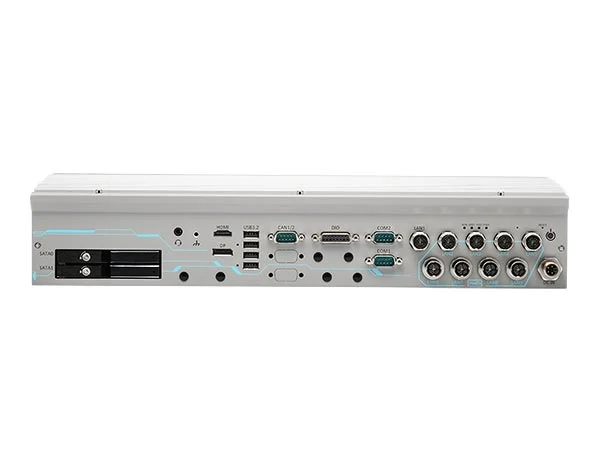
- Intel® 14th/13th/12th Gen LGA1700 processor (35W/65W)
- Fanless GPU computer with NVIDIA® RTX 2000 ADA
- 2U 19" chassis for rack-mount or wall-mount
- 8V to 48V DC input via M12 L-Coded connector
- 8x GbE PoE+, 1x GbE ports via M12 X-Coded connectors
- On-board isolated CAN bus for in-vehicle communication
- 1x M.2 2280 M Key with PCIe Gen 4x4 for NVMe storage
- 2x full-size mPCIe sockets with internal SIM sockets
- -25°C to 55°C fanless wide-temperature operation
GT-92RL-H
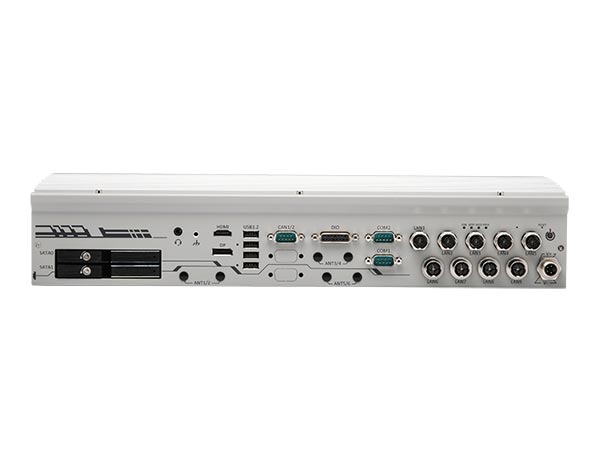
- Compliant with EN 50155 mandatory tests and EN 45545-2
- Intel® 14th/13th/12th Gen LGA1700 processor (35W/65W)
- Fanless GPU computer with NVIDIA® RTX 2000 ADA
- 2U 19" chassis for rack-mount or wall-mount
- 43V to 160V DC input via M12 K-Coded connector
- 9x GbE ports via M12 X-Coded connectors
- 1x M.2 2280 M Key with PCIe-Gen 4x4 for NVMe storage
- 2x full-size mPCIe sockets for MVB modules
- -40°C to 55°C wide-temperature fanless operation
Nuvo-2615RL
- Intel® Elkhart Lake Atom® x6425E CPU
- Up to 32 GB DDR4-3200 RAM
- USB 3.1, 2x COM, VGA and DVI-I
- 4x M12 X-coded PoE+ Gigabit Ethernet
- 1x 2.5’ SSD, 1x M.2 2280 NVME
- 4-CH isolated DI and 4-CH isolated DO
- Optionally with integrated 2500 Ws UPS
- EN50155 & EN45545 certified railway computer
Nuvo-2610VTC Serie
- Intel® Elkhart Lake Atom® x6425E quad-core processor
- Up to 32 GB DDR4 RAM
- Four GbE PoE+ ports via X-coded M12 connectors
- 1x M.2 NVME, 1x 2.5" SSD
- An M.2 3042/3052 B-key for mobile 4G/5G broadband connectivity
- 2x Full-Size Mini-PCIe for Wi-Fi, CAN, or GNSS modules
- Rugged, operating temperature range from -40°C to 70°C, fanless
- Certified for E-Mark and EN 50155 EMC compliance
Nuvo-5000VTC Series
- Intel® 6th Gen Core™ i3/i5/i7 CPU
- Up to 32GB DDR4-2133 SDRAM
- 4x USB 3.0, 4x USB 2.0, VGA, DVI, DisplayPort
- 4x / 8x RJ45 / M12 PoE+ Gigabit Ethernet ports
- 1x CAN 2.0 port, 4x isolated DI and 4x isolated DO
- 2x 2.5’ SSD/HDD, 1x full-size mSATA port, 4x full-size miniPCIe
- E-Mark, EN 50155 / EN45545 certification
Nuvo-7000VTC Series
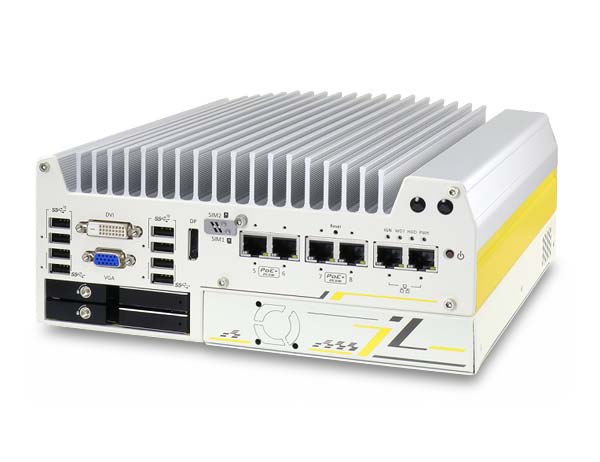
- Intel® 9th/8th Gen Core™ i3/i5/i7/Pentium/Celeron CPU
- Up to 64GB DDR4-2666 RAM
- 8x USB 3.1, 1x VGA, 1x DVI, DisplayPort
- 4x / 8x RJ45 / M12 PoE+ Gigabit Ethernet ports
- 1x CAN 2.0 port, 4x isolated DI and 4x isolated DO
- 2x 2.5’ SSD, 1x M.2 SSD, 3x miniPCIe
- E-Mark and EN 50155/ EN 45545 certification
Nuvo-7250VTC Serie
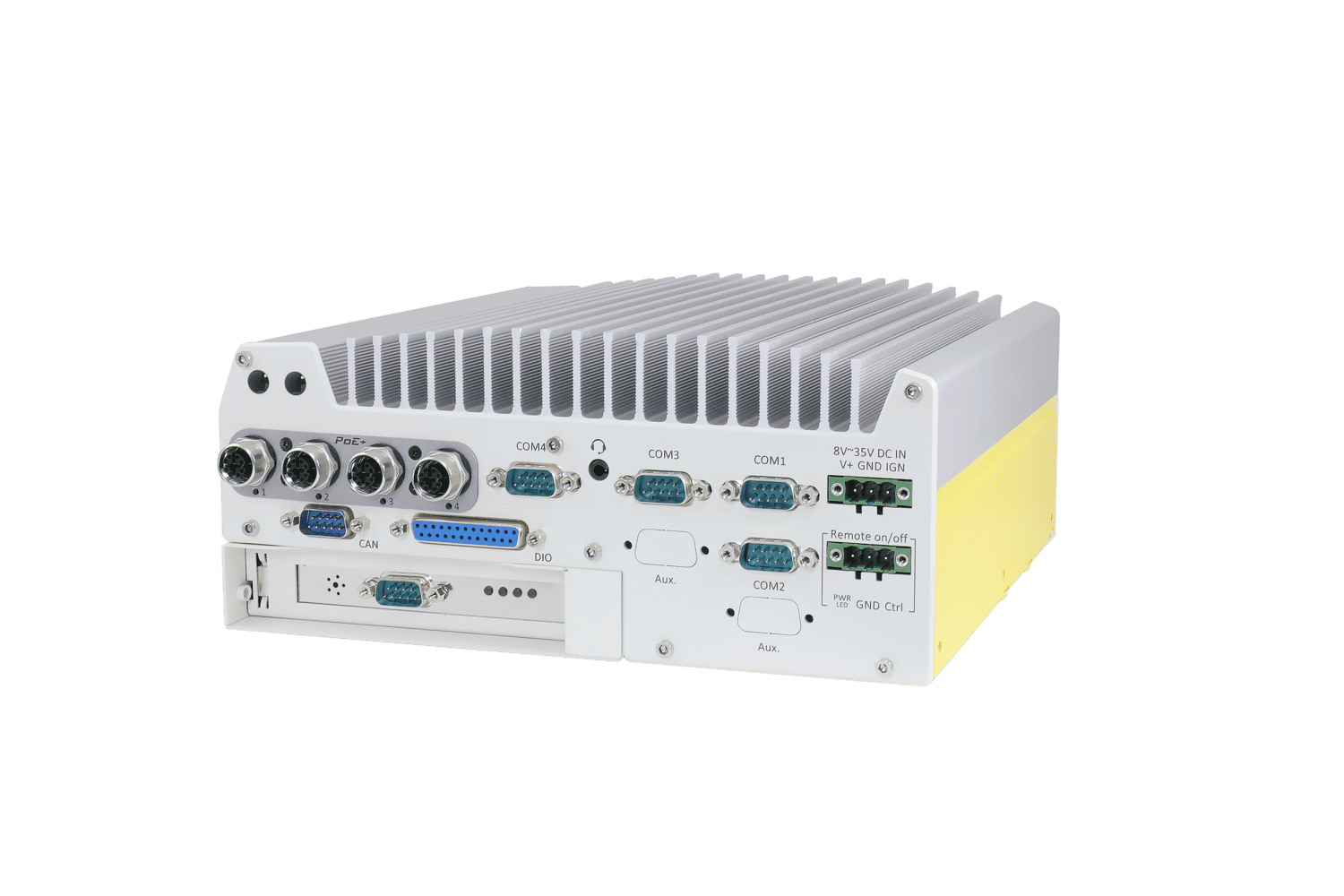
- Intel® 9th / 8th Gen Core™ i7/i5/i3 LGA1151 CPU
- Up to 64 GB DDR4 RAM
- Isolated DI/DO and CAN ports
- Four or eight RJ45 / M12 PoE+ ports
- 8-35 V wide-range input with ignition control
- Integrated UPS with 2500 Ws
- E-mark and EN 50155 / EN 45545 certification
Nuvo-9000VTC Series
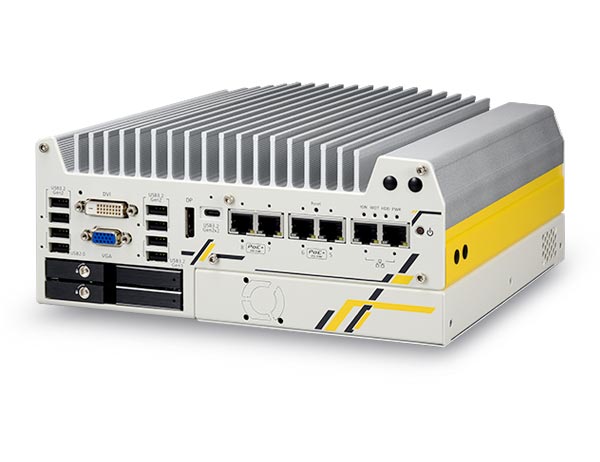
- Intel® 12th/13th/14th Gen Core™ i3/i5/i7/i9 CPU
- Up to 64GB DDR5-4800 RAM
- 8x USB 3.2, 1x USB-C, 1x VGA, 1x DVI-D, DisplayPort
- 4x / 8x RJ45 / M12 PoE+ 2.5G Ethernet ports
- 1x CAN 2.0 port, 4x isolated DI and 4x isolated DO
- 2x 2.5’ SSD, 1x M.2 SSD, 3x miniPCIe
- E-Mark, EN50155 and EN50121 certifications
POC-351VTC
- Intel® Apollo Lake Atom™ E3950 Quad-core CPU
- Up to 8 GB DDR3L-1866 RAM
- 2x USB 3.0, 2x USB 2.0, VGA, DVI
- 3x Gigabit Ethernet (2x PoE+)
- Isolated CAN 2.0 port and DIO interface
- mSATA SSD, 3x Full-Size miniPCIe port
- E-Mark certification for in-vehicle applications
- Robust operation at -25°C ~ 70°C
POC-451VTC
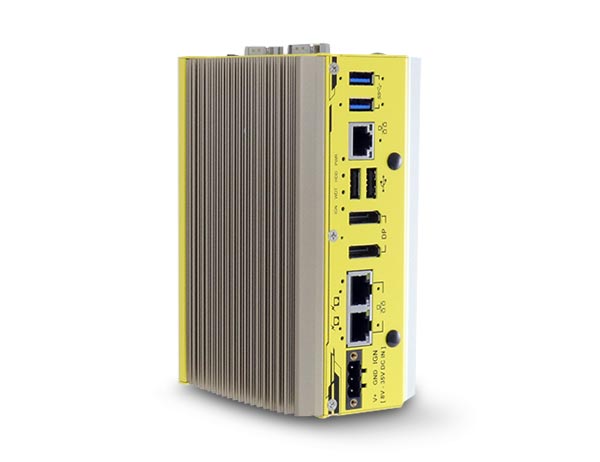
- Intel® Atom® x6425E Quad-core Processor
- Up to 32GB DDR4-3200 SDRAM
- 2x USB 3.2, 2x USB 2.0, 2x Serial Ports, 2x DisplayPort
- 3x 2.5G Ethernet, 2x PoE+ Ports
- 4x isolated DI and 4x isolated DO
- Power supply through 8 – 35V wide range input, with integrated ignition control
- E-Mark and MIL-STD-810G Certification
POC-551VTC
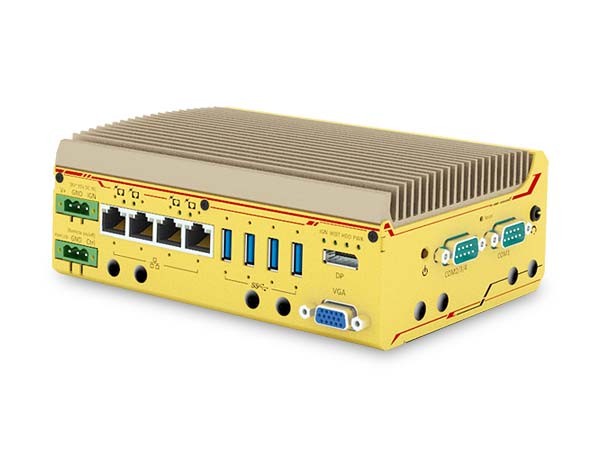
- AMD Ryzenâ„¢ Embedded V1605B quad-core CPU (15 W)
- Up to 16GB DDR4-2400 SDRAM
- 4x USB 3.0, VGA, DisplayPort, 2 serial ports
- 4x Gigabit PoE+ ports
- 1x CAN 2.0 port, 1x DIO
- M.2 2280 NVME, 3x miniPCIe, 1x mSATA
- Robust, fanless operation at -40°C ~ 70°C
POC-751VTC
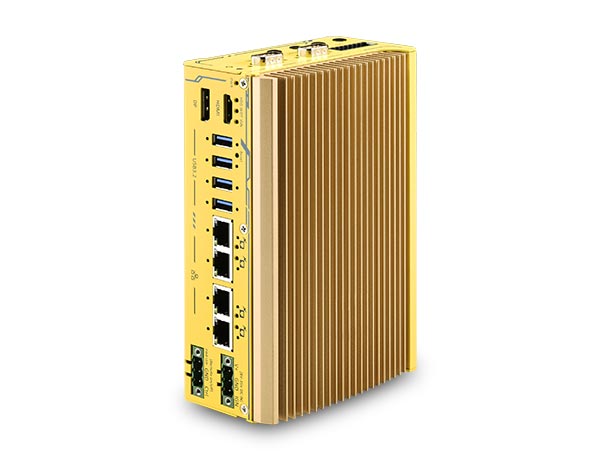
- Intel® Alder Lake i3-N305 Processor (15 W)
- Four GbE-PoE+ ports and four USB 3.2 Gen 2 ports with screw lock
- Two monitor outputs (DP++ and HDMI 1.4b)
- Two isolated CAN 2.0 ports, with support for SocketCAN in Linux
- Isolated DI (8-channel) and isolated DO (8-channel)
-
Power supply via 8 – 35 V DC input, with integrated ignition control
-
E-Mark and EN 50155 EMC certification
What exactly is a automotive PC?
A automotive PC – also known as a vehicle computer or car PC – is a specially developed industrial PC designed for reliable use in mobile and harsh environments. Unlike conventional computer systems, a vehicle PC is particularly resistant to shocks, vibrations and extreme temperatures.
In addition, automotive PCs meet special requirements for power supply, efficiency and connectivity. They are designed for 24/7 operation and are ideal for all types of vehicles – from passenger cars and commercial vehicles to special-purpose vehicles such as buses, trains and construction machinery. With their robust construction and intelligent control technology, they form the basis for modern applications such as fleet management, AI-based driver assistance and telematics solutions.
The main advantages of a vehicle PC in mobile use
- Robustness: Thanks to shock-resistant casings and vibration-resistant construction, mobile PCs are ideally suited for harsh operating conditions in road, rail or off-road transport.
- Compact design: Thanks to their space-saving design, the systems can be easily integrated into fittings, control cabinets or concealed installation locations – ideal for limited space in vehicles.
- Energy efficiency: Vehicle computers are optimised for direct operation via the vehicle battery. They consume little power, yet still offer high computing power for demanding tasks.
- Flexible interfaces: With CAN bus, GPS, Wi-Fi, Ethernet and mobile radio modules (4G/5G), the systems can be networked in a variety of ways and tailored precisely to your requirements.
Many models also feature an integrated IGN function that automatically controls the system in relation to the ignition. This extends service life, prevents deep discharge and increases energy efficiency in mobile applications.
A proven example of a powerful vehicle PC solution is the Nuvo-9200VTC series – developed for demanding applications in transport, municipal fleets or autonomous systems.
Diverse areas of application for vehicle PCs in industrial environments
Vehicle PCs play a central role in modern industrial applications and enable reliable data processing, control and communication directly in the vehicle. Their possible uses are diverse and cross-industry – from logistics to construction and emergency services to public transport.
- Efficient fleet management: Through GPS tracking, real-time communication and operational data collection, industrial PCs for vehicles enable optimised management of commercial vehicle fleets in transport and logistics as well as in public transport.
- Control of special-purpose vehicles: In sectors such as construction, agriculture and emergency services, vehicle computers take control of complex machine functions and support efficient workflows – even in changing environmental conditions.
- Driver assistance and autonomous systems: In conjunction with sensor and camera technology, automotive PCs support modern driver assistance systems (ADAS) and autonomous driving functions – for greater safety and automation.
- Diagnostics & Predictive Maintenance: Vehicle PCs continuously collect diagnostic data, analyse system statuses in real time and help reduce downtime through early fault detection and preventive maintenance.
- Information and ticketing systems: In buses and trains, they control passenger information, digital displays, ticketing solutions and mobile communication systems – ensuring smooth operations in public transport.
Thanks to their robust construction, intelligent power supply and high connectivity, vehicle PCs are perfectly tailored to industrial requirements. They increase efficiency, safety and digitalisation directly at the mobile interface – regardless of the location.
Key technical features of modern vehicle PCs
Thanks to their special technical features, automotive PCs are an indispensable component for mobile and industrial applications in the automotive sector. They combine reliability, adaptability and efficiency – even under the most demanding conditions.
- Fanless design: Passive cooling prevents dust ingress and reduces mechanical wear – ideal for use in vibration-intensive and dusty vehicle environments. The result: longer service life with minimal maintenance.
- IGN function: This intelligent ignition control allows the system to automatically start up and shut down when the vehicle is started or stopped. This protects the battery and improves energy efficiency – especially in fleets and municipal vehicles.
- High expandability: Vehicle computers offer flexible configuration options – from mobile communication modules (4G/5G) and additional storage options to HDMI, USB and COM ports for a wide range of application scenarios.
- Robust housing construction: With a temperature range of -40°C to +70°C and high shock and vibration resistance, vehicle PCs are ideally suited for extreme climatic and mechanical stresses.
In addition, many models support modern operating systems such as Windows 11 IoT or Linux, as well as industry-specific software solutions – making vehicle PCs flexible platforms for infotainment, telematics, fleet management and autonomous applications.
Vehicle PCs vs. automotive PCs: similarities and differences
Terms such as car PC, vehicle computer or automotive PC all refer to robust computer systems that have been developed for use in a vehicle environment. However, the systems differ in terms of their objectives and range of functions.
A classic car PC is often geared towards infotainment applications in the private sphere – such as media playback, navigation or connectivity for passengers. In contrast, vehicle PCs and automotive PCs focus more on industrial and safety-critical applications. These include fleet management, driver assistance, real-time diagnostics and integration into control and communication systems.
With their robust design, intelligent energy management and expandable hardware architecture, these systems are ideal for demanding industry solutions – from commercial vehicles and municipal fleets to construction and emergency vehicles. With powerful processors, CAN bus support, 4G/5G modules and a long service life, industrial PCs for vehicles are optimally equipped for future digital mobility solutions.
Our highlights
Nuvo-9000VTC Series
- Intel® 12th/13th/14th Gen Core™ i3/i5/i7/i9 CPU
- Up to 64GB DDR5-4800 RAM
- 8x USB 3.2, 1x USB-C, 1x VGA, 1x DVI-D, DisplayPort
- 4x / 8x RJ45 / M12 PoE+ 2.5G Ethernet ports
- 1x CAN 2.0 port, 4x isolated DI and 4x isolated DO
- 2x 2.5’ SSD, 1x M.2 SSD, 3x miniPCIe
- E-Mark, EN50155 and EN50121 certifications
POC-751VTC
- Intel® Alder Lake i3-N305 Processor (15 W)
- Four GbE-PoE+ ports and four USB 3.2 Gen 2 ports with screw lock
- Two monitor outputs (DP++ and HDMI 1.4b)
- Two isolated CAN 2.0 ports, with support for SocketCAN in Linux
- Isolated DI (8-channel) and isolated DO (8-channel)
-
Power supply via 8 – 35 V DC input, with integrated ignition control
-
E-Mark and EN 50155 EMC certification
POC-551VTC
- AMD Ryzenâ„¢ Embedded V1605B quad-core CPU (15 W)
- Up to 16GB DDR4-2400 SDRAM
- 4x USB 3.0, VGA, DisplayPort, 2 serial ports
- 4x Gigabit PoE+ ports
- 1x CAN 2.0 port, 1x DIO
- M.2 2280 NVME, 3x miniPCIe, 1x mSATA
- Robust, fanless operation at -40°C ~ 70°C
FAQ - Vehicle PCs for automotive and transport
In-vehicle PCs must withstand particular stresses. Here you will find answers to questions about certifications, power supply and the special features of our vehicle computers.
What distinguishes a vehicle PC from a standard industrial PC?
A vehicle PC is specially protected against extreme vibrations and shocks (according to MIL-STD-810G). It also features intelligent ignition control and is designed for the fluctuating on-board voltages in cars, lorries and buses.
What is the significance of E-mark certification (E13 / E1)?
E-mark certification is the type approval for electrical components in vehicles. It ensures that the device complies with EMC directives and does not interfere with the vehicle's on-board electronics. This is usually mandatory for legal operation in vehicles on public roads.
What is Ignition Power Control?
This function monitors the vehicle's ignition signal. The PC boots up automatically when the engine starts and initiates a clean shutdown when the ignition is turned off. Adjustable delay times also prevent the vehicle battery from being deeply discharged.
Can cameras for fleet management or AI be connected directly?
Yes, many of our vehicle PCs offer M12 connectors or PoE (Power over Ethernet) ports. This allows IP cameras to be powered and read directly with just one cable – ideal for NVR applications or AI-based driver assistance systems.
Are the PCs suitable for use in rail vehicles?
For railway applications, we offer special models that are certified according to EN 50155. These meet even stricter requirements for fire protection (EN 45545-2), insulation and extended temperature range.
Which radio modules (LTE/5G/GPS) are integrated?
Our vehicle PCs usually have several mPCIe or M.2 slots for mobile communications (4G/5G), Wi-Fi and high-precision GPS/GNSS. The antenna connections are routed to the outside to ensure optimal reception even when installed in a concealed location.